3D Tours for Hotels vs. Cruise Ships: Why One Approach Doesn’t Fit Both
And what cruise lines should look for when choosing the right vendor
Immersive 3D tours have become well established across the hospitality industry. Hotels use them to make rooms and event spaces explorable in advance, and cruise lines are increasingly adopting the same technology to showcase suites, restaurants, and public areas. At first glance, it seems like the same approach could simply be carried over from hotels to ships.
That’s only partly true — and the difference is bigger than many cruise lines initially assume. A cruise ship is not a hotel that happens to float. Scanning a ship as if it were a building underestimates the technical, logistical, and safety-related complexities that only specific experience in the marine environment can reliably handle. The result: a product that falls short of the actual task — and one where the shortcoming often only becomes obvious once the tour is already finished and live.
Why ships demand a different approach than hotels
1. A ship is not a fixed building A hotel stands still. A cruise ship gets built, delivered, refitted, chartered across a fleet, and changes ownership — and often needs to be captured while in active operation, with hundreds or thousands of guests on board. That requires experience that goes well beyond classic real estate or hotel scanning: knowing how to work in tight spaces, under time pressure, and without disrupting shipboard operations produces a very different result than a first attempt under these conditions.
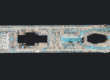
2. Structure: decks, not floors Hotels are typically organized in a straightforward vertical layout. Ships are made up of complex decks with varying access points, security zones, crew areas, and narrow corridors. Capturing this structure reliably and completely — so that the result is a fully navigable deck rather than a string of isolated rooms — requires a scanning methodology built specifically for ships, not one simply carried over from hotel projects.
3. Tight timelines around newbuilds and refits Shipyard handovers and refit schedules are extremely tight. A ship often leaves the shipyard just days before the first booking season or maiden voyage. Delivering during this window means understanding the realities of a shipyard handover and being able to respond without lead time. Vendors coming primarily from hotel or real estate work are rarely prepared for this speed and the specific logistics on board — risking a tour that’s only ready weeks after it was actually needed.
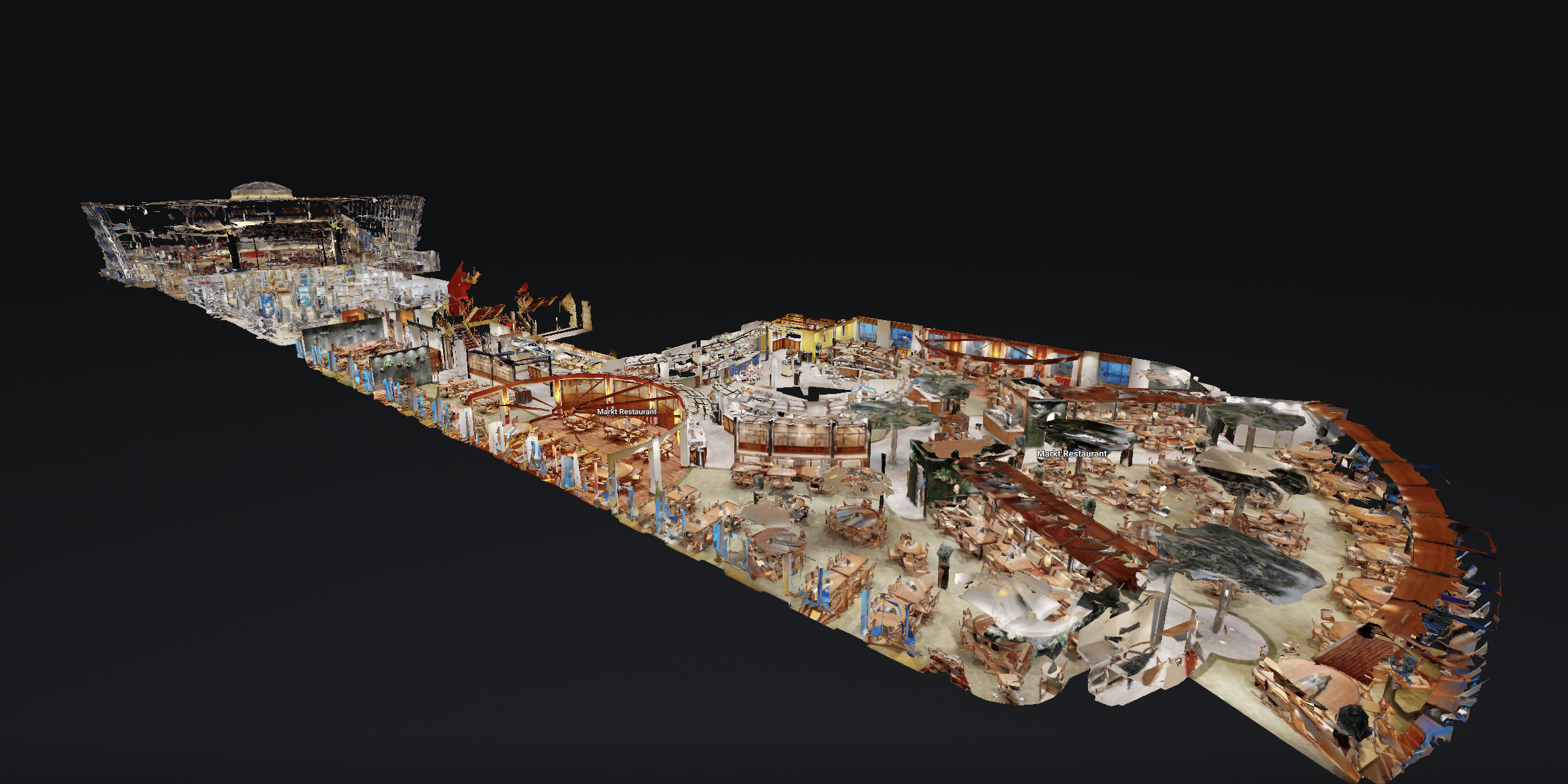
4. The goal: a ship, not a catalog of individual images Many solutions on the market today deliver individual 360° panoramas per room — a bar here, a suite there, each as a separate link. That shows individual impressions but doesn’t replicate the feeling of actually walking through a ship: from the suite, down the corridor, into the restaurant, out onto the sun deck. That distinction determines whether a prospective guest can truly picture the experience on board — or is just looking at a series of disconnected, pretty pictures.
What cruise lines should look for when choosing a vendor
For decision-makers at cruise lines commissioning a 3D vendor for the first time — or re-evaluating one — the following criteria are worth a close look:
Proven experience with ships, not just hospitality in general A vendor that primarily scans hotels, event venues, or real estate rarely brings the experience needed for the specific conditions on board — from security clearances and crew zones to the sheer scale of space that must be captured in a single day. Ask directly about completed ship projects, not general hospitality references: how many ships have been fully captured, for which cruise lines, and at what fleet scale?
Whole deck vs. single room Ask specifically: does the vendor deliver a single, connected, walkable tour across multiple decks — or a collection of individual panoramas only linked through a menu? The difference matters significantly for the guest experience.
Ability to scan live Can the vendor scan during an active sailing with guests on board, or does the project require a fully empty ship? This determines how flexibly a project fits into existing fleet schedules.
Speed after shipyard handover How quickly can the tour be finished and go live after handover from the shipyard? When the window between handover and the first booking season is tight, this is often the deciding factor.
References within the cruise segment Reference projects with other cruise lines — ideally verifiable and at a comparable fleet size or brand positioning — say more than general hospitality case studies.
Underlying technology Matterport Pro3 with LiDAR delivers a different level of precision and dimensional accuracy than pure 360° camera capture — relevant if the tour will later also be used for sales, deck plan visualization, or technical purposes.
Conclusion
3D tours are no longer a nice-to-have for cruise lines — they’re an increasingly expected sales tool, precisely because the booking decision is so often made long before boarding. Choosing the wrong vendor can mean ending up with a set of pretty individual images instead of a tour that actually drives bookings. The right partner is what determines whether a ship truly becomes explorable — or only a handful of rooms do.
FAQ
Frequently asked questions about Matterport tours on cruise ships, 3D digital twins for cruise lines, and our partnership with LIQUID AMBIENT:
What is a digital twin of a cruise ship?
A digital twin of a cruise ship is a complete, true-to-scale 3D replica of the entire vessel—from the cabins to the outdoor decks to the crew areas. Created using the Matterport Pro3 scanner and LiDAR technology, it enables a realistic, navigable online tour. Passengers, prospective crew members, and travel agencies can explore the ship virtually—this enhances the customer journey and has been proven to increase booking rates and conversion.
Which cruise ships has LIQUID AMBIENT already digitized?
For example, Liquid Ambient has created complete 3D digital twins of the entire AIDA fleet—including the AIDAnova and AIDAcosma (Helios class), the AIDAprima and AIDAperla (Hyperion class), and several ships of the Sphinx class. For TUI Cruises, the Mein Schiff Relax has been digitized; the Mein Schiff Flow and other ships in the TUI fleet are already in the process of being digitized.
Why is Matterport scanning so difficult on ships?
How long does it take to scan an entire cruise ship?
How much does a Matterport scan of a cruise ship cost?
Can LIQUID AMBIENT also scan hotels and other hospitality properties?
Is a scan possible during a shipyard visit (dry dock)?
About Liquid Ambient
For over 15 years, Liquid Ambient has been a technology leader in 360° and 3D tours. The company, headquartered in Stuttgart, Baden-Württemberg, creates bespoke virtual experiences for international hotel chains, cruise lines, and tourist destinations. State-of-the-art scanning and rendering technologies – including Matterport Pro3, LiDAR and high-end CGI – deliver greater visibility, higher conversion rates and an optimised customer journey. www.liquidambient.com
Are you planning a cruise ship or hotel project?
Whether dry dock visit, turnaround day or active operation – we develop the right logistics and scanning concept for your project.